
Considerate Pouchers, today announced the release of the 2026 European Pouch Accessibility Index. This comprehensive report ranks 29 jurisdictions, including the EU-27, the United Kingdom, and Switzerland, based on their regulatory approach to nicotine pouches, a critical tool in the global fight against tobacco-related harm.
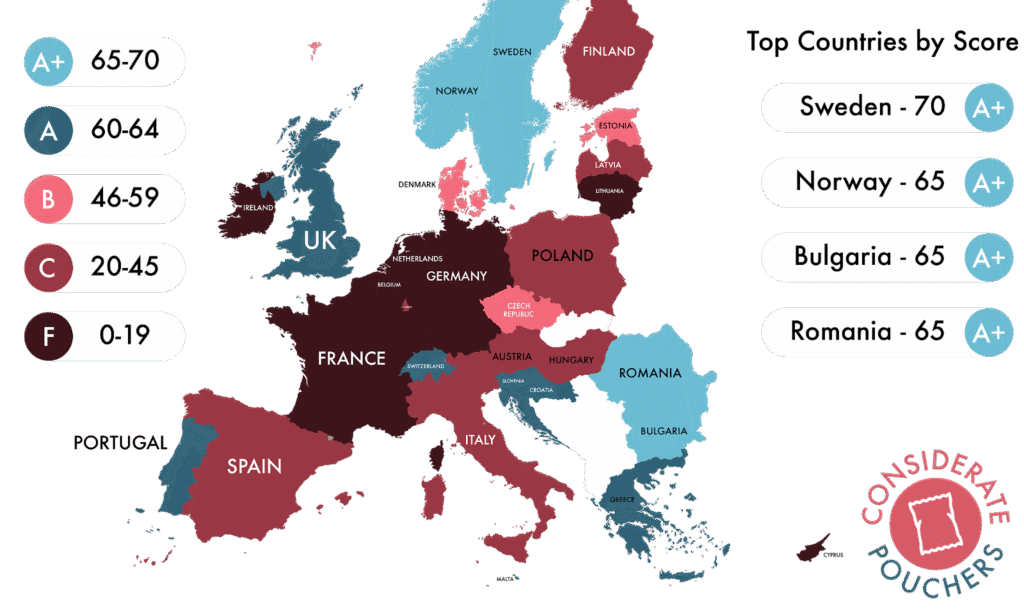
As Europe nears its goal of a smoke-free generation, the Index reveals a continent starkly divided. While a Swedish experience of harm reduction is emerging in the North and East, major Western European powers are increasingly turning toward prohibition, misclassification, and punitive taxation.
“In the race to make Europe smoke-free, nicotine pouches have emerged as a pivotal tool for public health,” said Juan Rafael Taborcía, Global Spokesperson of Considerate Pouchers. “However, as we approach 2026, the continent finds itself at a regulatory crossroads. While nations like Sweden have embraced pouches to drive smoking rates toward historic lows, others are constructing legislative barriers that threaten to undo decades of progress.”
Key Findings of the 2026 Index:
- Schweden sichert sich den Goldstandard (70/70): Schweden ist nach wie vor das einzige Land mit der Höchstpunktzahl, da es Beutel erfolgreich von Tabakerzeugnissen unterschieden und im Jahr 2014 sogar die Steuern gesenkt hat, um Raucher für den Umstieg zu belohnen.
- Ein wachsender prohibitionistischer Block: Deutschland, die Niederlande, Belgien, Litauen und Zypern erhielten aufgrund vollständiger Verkaufsverbote im Einzelhandel und Online-Handel die Note „ungenügend“ (F). Diese Maßnahmen beseitigen die wirksamsten Ausstiegsmöglichkeiten für Raucher und schützen somit den Status quo des Zigarettenkonsums.
- Der französische Rechtsstreit: Frankreich erhielt trotz einer kürzlich erlassenen einstweiligen Verfügung gegen das Verbot von Plastiktüten eine ungenügende Bewertung. Der Index hebt hervor, dass der Markt selbst mit der Aussetzung des Dekrets aufgrund restriktiver Auslegungen des Gesundheitsgesetzbuches für erwachsene Konsumenten weiterhin faktisch verschlossen bleibt.
- Spanien als „Grenzfall“: Spaniens Bewertung von 45 (C) spiegelt ein hohes Maß an Rechtsunsicherheit wider. Vorgeschlagene Aromenverbote und eine willkürliche Nikotinobergrenze von 0,99 mg schaffen ein faktisches Verbot, das die Wahlmöglichkeiten der Verbraucher und die Marktinnovation einschränkt.
The Advantage of Access: The Index highlights that jurisdictions achieving an ‘A’ or ‘A+’ grade, such as Norway, Bulgaria, and Romania, provide a Consumer Advantage. These states utilize risk-proportionate taxation and protect flavor variety, which empirical data suggests is essential for preventing relapse into combustible tobacco use.
“Innovation, not prohibition, is the way forward for a smoke-free Europe,” Taborcía added. “When states misclassify pouches as tobacco or ‘novel foods,’ they aren’t protecting children, they are protecting smoking rates by making it harder for pouchers to live healthier lives.”
Methodology The Index utilizes a 70-point quantitative scoring system across seven evaluation pillars: Tobacco Classification, Flavor Accessibility, Registry Hurdles, Tax Parity, Digital Availability, Retail Inclusion, and Nicotine Caps. States are penalized for “Edge Cases” where pending legislation or official hostile intent creates consumer uncertainty.


 DE
DE  EN
EN  UK
UK  FI
FI  FR
FR  SV
SV  UZ
UZ  ES
ES  CS
CS