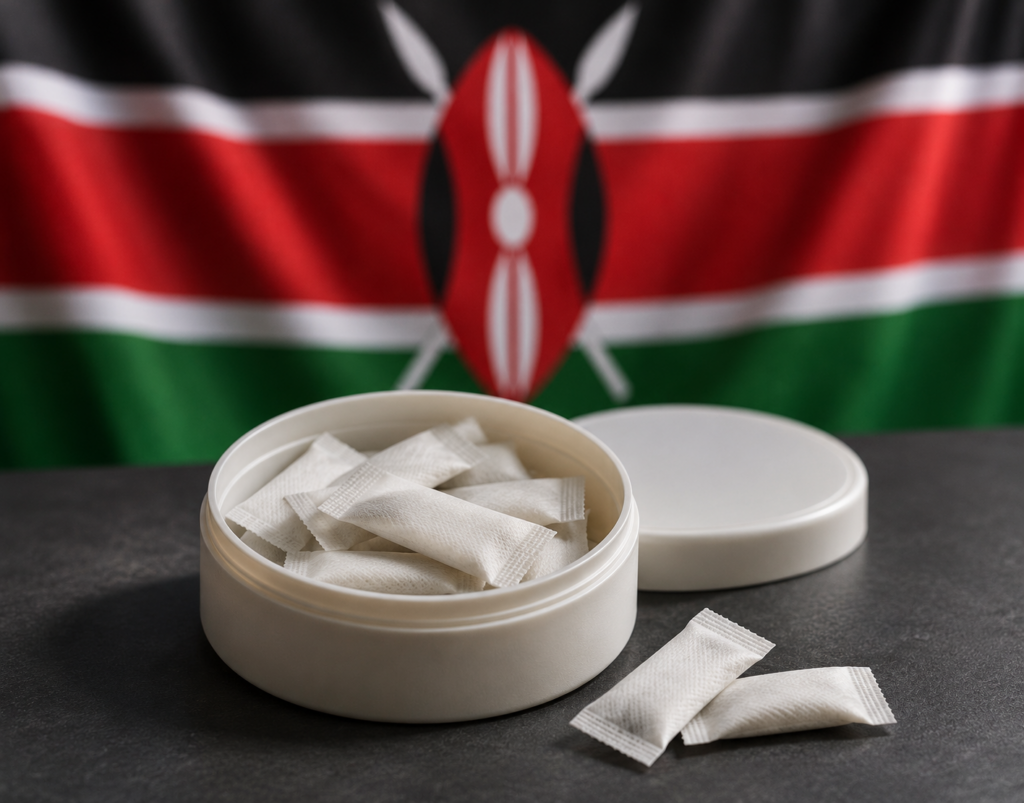
In March, Kenya’s Senate passed a bill to regulate nicotine pouches, with a 20 mg nicotine cap and child- and tamper-proof packaging. That bill is still before the National Assembly. On November 5th, the same House received a second bill that goes the opposite way.
The Alcoholic Drinks and Drugs Control Laws (Amendment) Bill, 2026, sponsored by Majority Leader Kimani Ichung’wah, would ban the manufacture, sale, advertising, distribution and use of nicotine pouches, with a fine of up to KSh 5 million (about €34,000), up to ten years in prison, or both. The same bill punishes selling tobacco to a child with up to KSh 500,000 or one year in prison. An adult using a smokeless product at home would face a maximum prison term ten times longer than someone who sells cigarettes to a 15-year-old.
When the bill was introduced, Mr Ichung’wah told the House that “vapes are nicotine pouches.” They aren’t. A pouch contains no tobacco leaf, isn’t burned or heated and produces no smoke, so nobody nearby breathes anything in. Its risk is far lower than smoking. We Are Innovation puts cigarettes at 100 and pouches at 0.1 on its risk spectrum, and a peer-reviewed analysis published this year found five of nine monitored toxicants to be 97.7% to 99.9% lower in pouches than in cigarette smoke. In the US, the FDA has authorised 67 pouch products after review and describes them as a lower-risk option for adults who smoke.
Sweden shows what regulation can do. It kept snus and nicotine pouches legal for adults, and only 3.7% of Swedish adults smoked daily in 2025. A 2024 modelling study projected that a similar approach could cut Kenya’s tobacco-related deaths from about 8,000 a year to 3,400 by 2060, saving around 184,000 lives. Bans tend to push the other way. In Australia, where nicotine vapes are sold legally only through pharmacies, 93% of people who vape buy from illicit sources, with no age checks and no strength limits.
That is why Considerate Pouchers is submitting a memorandum asking the committee to remove pouches from the ban and regulate them as nicotine products, with sales to adults over 18 only, a cap of 20 mg per pouch and no less, no flavour bans and no penalties for adult users. Twenty milligrams is the limit we also back in the UK through the 20IsPlenty campaign, and it is the one Kenya’s Senate already chose. The National Assembly should build on that work instead of undoing it.
 EN
 UK
 FR
 DE
 SV
 ES